Air damper actuators: Siemens SQM and SQN explained
The damper sets how much air the burner gets, and the actuator sets the damper. If it sticks, drifts or stops, combustion goes wrong long before anything breaks.
What the actuator does
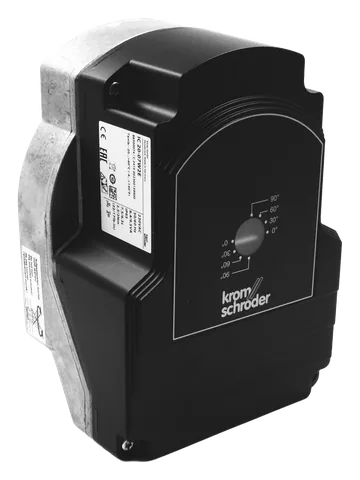
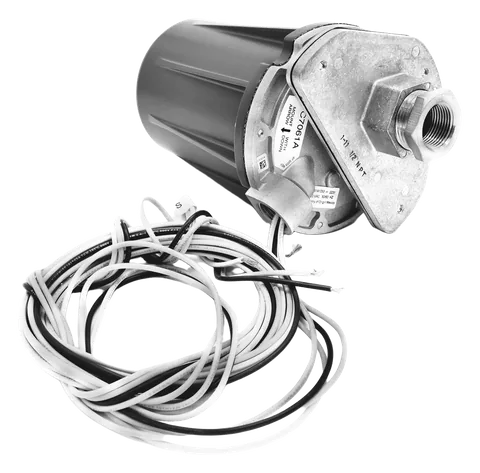
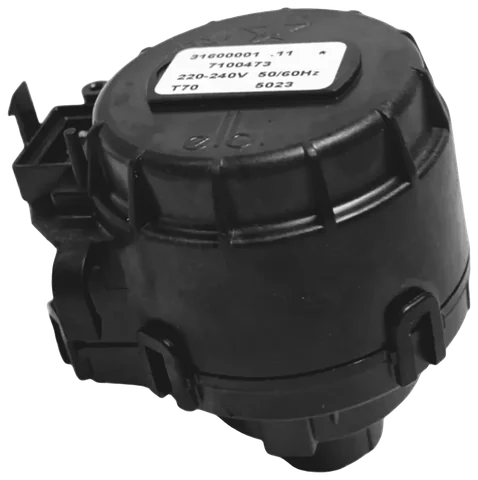
On a modulating or two-stage burner an electric actuator turns the air damper. It moves between the low-fire position, the high-fire position and, on many burners, a closed position for pre-purge and shutdown. The burner control tells it where to go. The air has to be right at each position: too little and the flame is yellow and sooty, too much and the efficiency falls and the flame may lift off.
Four numbers on the plate
- Torque. How hard the actuator can turn the damper. It must exceed the load of the damper and the push of the air stream.
- Holding torque. How much the actuator holds when it is switched off. Siemens guidance for the SQN is that the torque the air stream puts on the damper should stay below the self-holding torque.
- Running time. How long a full turn takes, usually for 90°.
- Direction and signal. Two-stage, three-position or modulating control, and the supply voltage.
The Siemens families
| Family | Torque (as listed) | Typical running time |
|---|---|---|
| SQN3 and SQN4 | Holding torque from 0.8 to 3 Nm (SQN3); 6 Nm (SQN4) | 4.5 to 30 s (SQN3); 120 s (SQN4) |
| SQN7 | Holding torque 0.7 to 1.3 Nm | Depends on type |
| SQM33 | Up to 3 Nm, or 10 Nm for the SQM33.7 | 5 to 120 s for 90° |
| SQM10 and SQM20 | Up to 20 Nm | 14 to 100 s (SQM1), 29 to 66 s (SQM2) |
| SQM40 and SQM41 | Up to 18 Nm | Depends on type |
| SQM5 | Up to 40 Nm | 10 to 90 s |
The figures come from summaries of Siemens data sheets and differ by exact type, so always read the type designation on the plate and the data sheet for that type. Within a family the digits after the dot define the torque, the time and the voltage, so two SQN30 actuators with different digits are different parts.
Signs of a failing actuator
- The damper does not reach the low-fire or high-fire position; the burner control shows a fault.
- The actuator hums but does not move, or moves jerkily.
- The damper position drifts between starts, and the combustion values change.
- A damper that is stiff or has a loose coupling wears the actuator out. Check the damper first.
Replacing
Take the full type designation from the plate. The fit, the shaft, the direction of rotation and the cams matter, and after any replacement the burner has to be set and measured again. See also how to read a lockout, because a stuck actuator is often reported as a lockout during pre-purge.
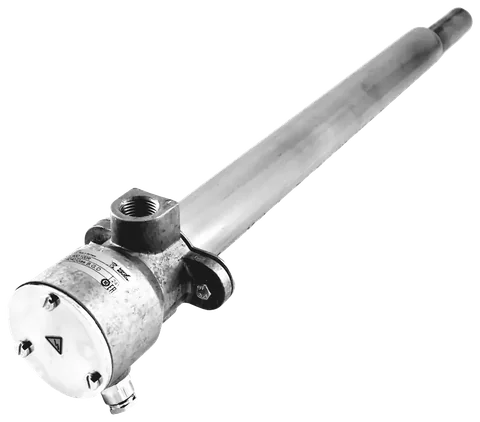
Actuators for Siemens, Riello, Baltur, Elco, Lamborghini and other burners are in the actuators section.
Sources: Siemens, data sheets for the SQM1, SQM2, SQM33, SQM4, SQM5 and SQN3, SQN4, SQN7 actuators, as summarised by distributors.