Burner motor trips: thermal overload relay, setting and reset
A fan motor that stops with the burner in the middle of a run has usually tripped its overload relay. The relay did its job. Here is how it works, how it is set, and what it is trying to tell you.
What the relay does
A thermal overload relay protects the burner motor against too much current for too long. A current heater inside it warms a bimetal strip. If the current stays high, the strip bends and opens a contact in the control circuit, the contactor drops out and the motor stops. A short peak at start does not trip it, but a sustained overload does.
The setting
The current dial is set to the full-load current on the motor nameplate. It is not the tripping point. Under IEC 60947-4-1 a thermal relay must not trip at 1.05 times the setting and must trip within two hours at 1.2 times the setting. Setting it higher than the nameplate to stop nuisance trips leaves the motor without protection and does nothing to fix the cause.
In a star-delta starter the relay is often wired in the phase winding rather than in the supply line, and then its setting is 0.58 times the rated current of the motor. Follow the wiring diagram of the burner.
Trip class
The trip class describes how long the relay lets a start current pass. Class 10 is the most common: it can carry six times its rated current for 10 seconds before tripping. Motors with a long start use Class 20 or 30. A burner fan motor starts quickly, so Class 10 is the normal choice; a relay of another class changes the protection and has to be chosen on purpose.
Manual and automatic reset
Relays reset manually or automatically. After a trip the relay needs a few minutes to cool before it can be reset. If the motor is still overloaded when the relay is reset, it will trip again. Automatic reset on a burner is risky: it restarts a motor that has a fault, so it is not used where the manufacturer does not provide for it.
Why it trips
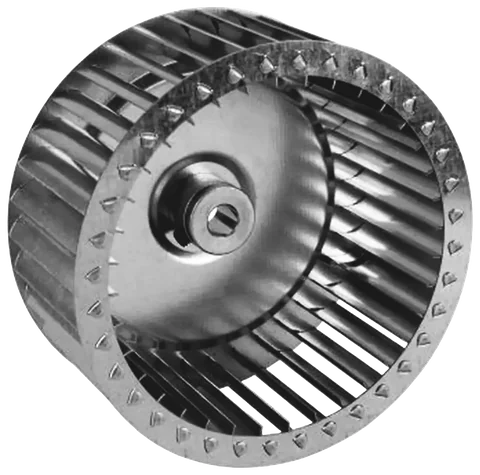
- A fan wheel clogged with dust or a stiff bearing, so the motor works harder.
- A pump that is jammed or has too much vacuum on a motor that drives both.
- Low supply voltage or a missing phase, which raises the current in the other windings.
- A damp or burnt winding.
- A relay set below the nameplate value, or an old relay that has drifted.
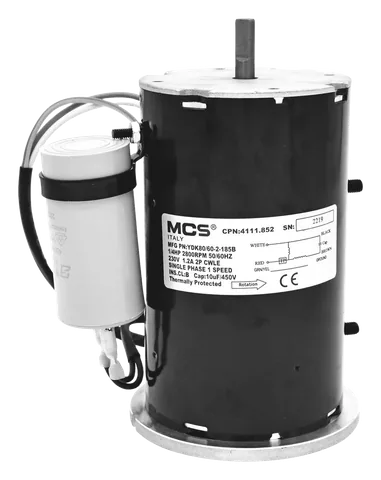
Measure the current with the motor running, compare it with the nameplate and look for the cause before you reset again and again. A burner that stops while the control box shows no fault often has this cause; see how to read a lockout.
Replacing
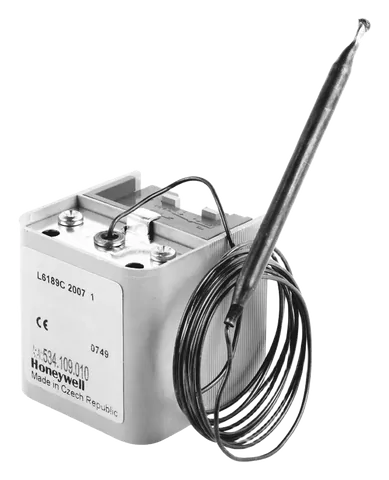
Take the current range and the make from the plate of the old relay, and the nameplate current of the motor. Thermal relays for Riello, Baltur, Eaton, AEG and others are in the sensors and switches section. Work on a burner should be done by a qualified technician following the manufacturer's manual.
Sources: IEC 60947-4-1 as summarised in manufacturers' documentation (ABB, Siemens 3RU, Schneider Electric); burner wiring diagrams.