Ignition electrodes: gap, position and when to replace them
Two thin rods and a gap of a few millimetres decide whether a burner lights. The numbers are small and the tolerance is smaller. Here is what the manufacturers say and what goes wrong in practice.
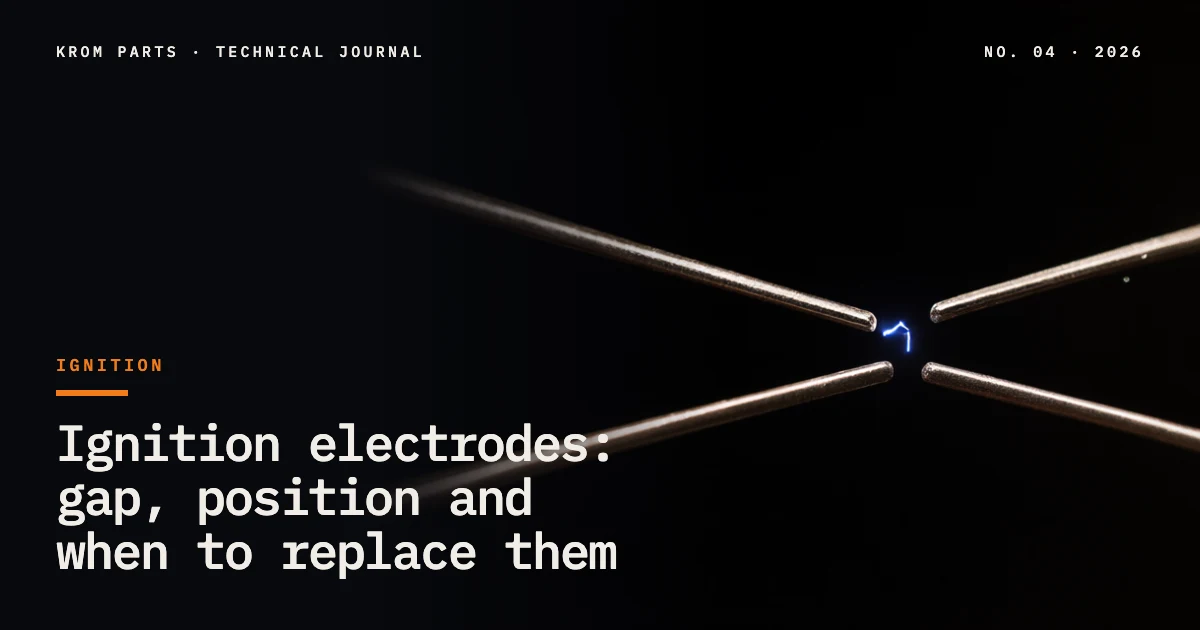
The gap
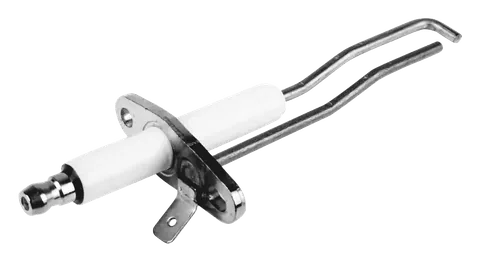
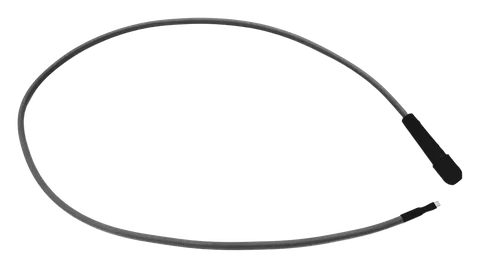
The Danfoss data sheet for the EBI4 ignition units gives a recommended electrode distance of 2.5 to 5 mm. It also warns against electrodes that diverge: the spark path becomes longer, the voltage the unit has to produce rises, and the high-voltage cable is at risk of breaking down. Burner manufacturers give their own value for their own burner, and that value is the one to use.
A gap that is too narrow gives a short, weak spark that may not light the fuel. A gap that is too wide asks more of the transformer than it can give, and the spark fails on a cold start or with a worn unit.
The position
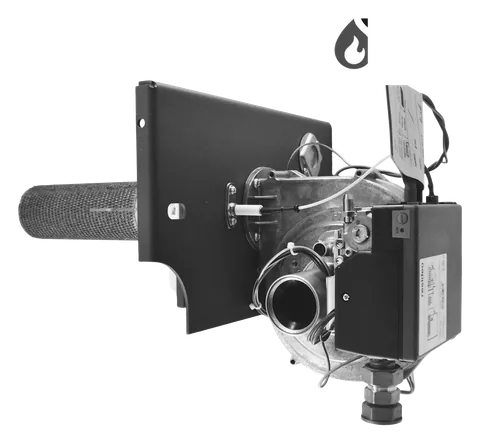
The size of the gap is not enough. The spark has to be in the right place: in the fuel spray on an oil burner, or in the gas and air mixture on a gas burner. The burner manual gives the distance from the electrode tip to the nozzle or to the head, and the height above the axis. An electrode too far forward is wetted by oil and sooted, and too far back is outside the fuel cloud. When you change an electrode, set it to the manual, not to the position of the old one, which may already have been wrong.
How electrodes wear
- Burnt tips. The spark erodes metal. The gap grows over the years.
- Soot and oil film. Carbon on the electrode or on the ceramic gives the spark an easier path to the body than across the gap.
- Cracked porcelain. A hairline crack in the insulator lets the spark escape through it. The spark is then visible at the crack rather than at the tip.
- Bent rods. After a service the gap may no longer match the manual.
When to replace
Electrodes are inexpensive, and a worn pair is a common reason for a burner that starts well in summer and fails in a cold, damp boiler room. The usual practice is to replace them at the annual service together with the nozzle on an oil burner, rather than to bend them back into shape. Replace them as a pair, with the ceramic holder if it is cracked, and set the gap with a gauge.
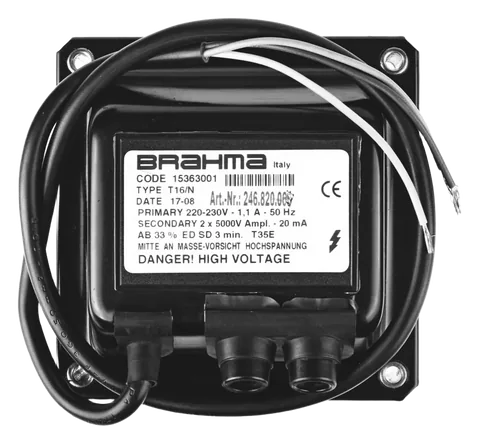
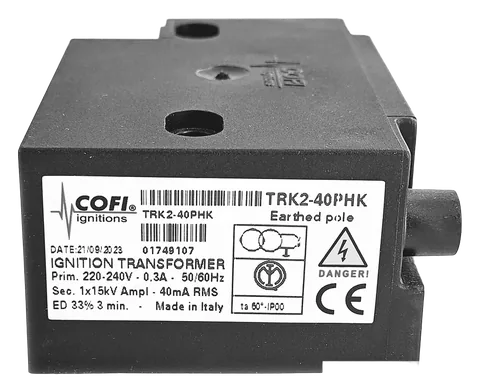
An ionisation probe looks similar but has another job: it proves the flame, not lights it. It is a different part and is covered in flame sensors. If there is no spark at all, start with the ignition transformer and cable.
Electrodes, ceramic holders and spark needles for many makes are in the ignition components section. Work on a burner should be done by a qualified technician following the manufacturer's manual.
Sources: Danfoss, EBI4 electronic ignition units, data sheet (recommended electrode distance 2.5 to 5 mm); burner manufacturers' service manuals.