Oil burner pumps: vacuum, pressure and the sounds a failing pump makes
The pump takes oil from the tank under vacuum and pushes it to the nozzle under pressure. Most pump trouble is not in the pump: it is in the suction line. Here is how to read the two numbers that tell you.
Two jobs, two numbers
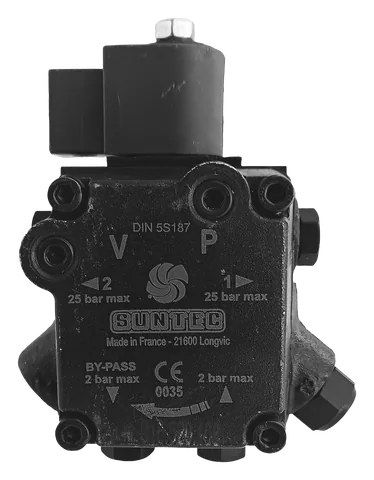
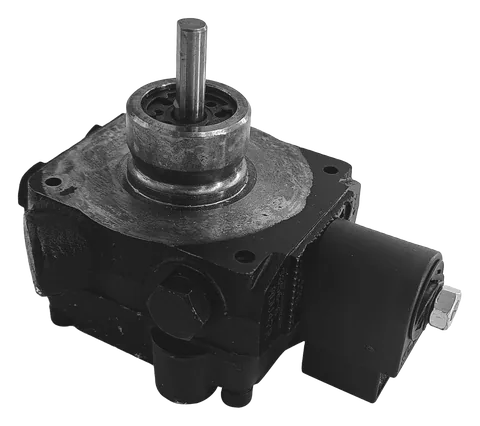
A burner pump of the Suntec AS type has a gear set that sucks oil from the tank and delivers it to the nozzle. It has two things to measure. Vacuum is the suction on the inlet side. Pressure is what the pump holds on the nozzle side. The pump housing has a separate port for each: a vacuum gauge connection, and a pressure gauge connection next to the pressure regulator.
Vacuum: the limit
The limit is set by physics. As suction rises, gas dissolved in the oil comes out of solution and forms bubbles. The pump then screeches and wears, and the flame becomes unstable. A burner manual from Elco gives a maximum depression of 0.4 bar; another manufacturer, Unigas, quotes about 0.45 bar to avoid outgassing. The right figure is in the manual of your burner and the data sheet of your pump.
High vacuum has a short list of causes:
- a blocked tank filter or a line filter;
- a suction line that is too long, too narrow or has too many bends;
- the tank outlet too far below the pump;
- a partly closed valve, or a kink in a flexible hose;
- cold, thick oil in winter.
An air leak shows differently: the vacuum gauge needle vibrates, and the flame flutters. A leaking fitting, a worn seal or a cracked flexible hose are usual.
Pressure
The pump regulator sets the nozzle pressure. Turning it clockwise raises the pressure, counter-clockwise lowers it, and a pressure gauge on the pressure port shows the value. The correct pressure depends on the nozzle and the burner; it is in the burner manual. Changing it changes the fuel flow, so it is a setting for a technician with a flue gas analyser.
First start and bleeding
Before a first start the suction lines must be filled with oil and air must be bled out through the gauge port, otherwise the pump runs dry and can be damaged. A pump that has just been fitted should never be run without oil.
What the pump is telling you
| Sound or sign | Likely cause |
|---|---|
| Screech or whistle | Vacuum too high, oil outgassing |
| Rattle at the coupling | Worn or loose coupling between the motor and the pump |
| Vibrating gauge needle | Air in the suction line |
| Oil on the housing | Shaft seal or cover seal |
| Normal vacuum, low pressure | Worn pump, blocked internal strainer |
Parts
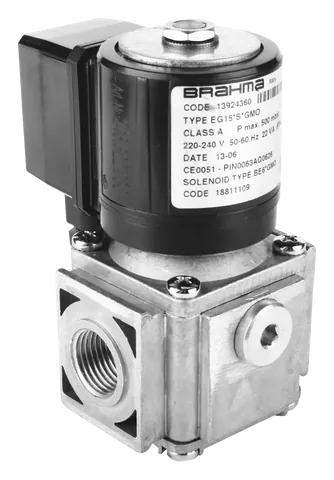
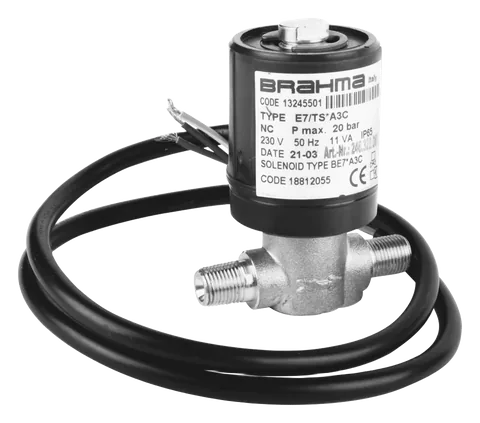
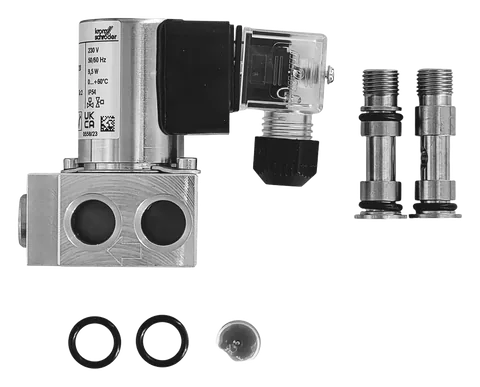
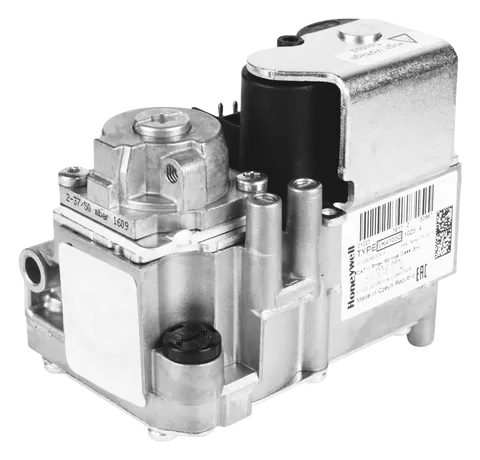
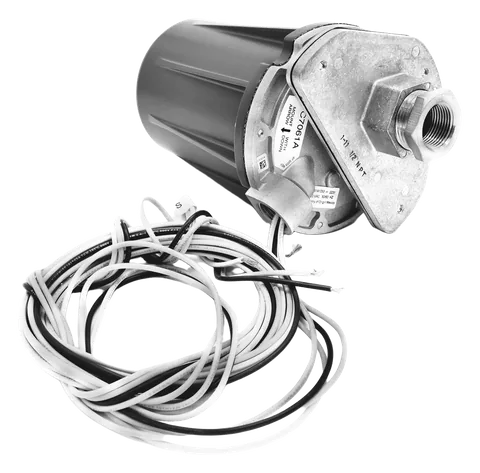
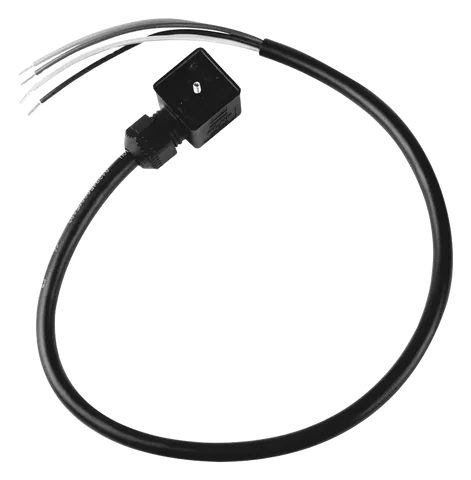
Oil supply parts are in the oil supply components section, and pump solenoid valves are with the valves and coils. Send us the pump type and number from its plate and we will check what we have. If the pump is fine and the flame is poor, check the nozzle filter next. Work on a burner should be done by a qualified technician following the manufacturer's manual.
Sources: Suntec, AS series pumps, data sheet; Elco burner installation manual (maximum depression 0.4 bar, pressure adjustment); Unigas burner manual (about -0.45 bar).